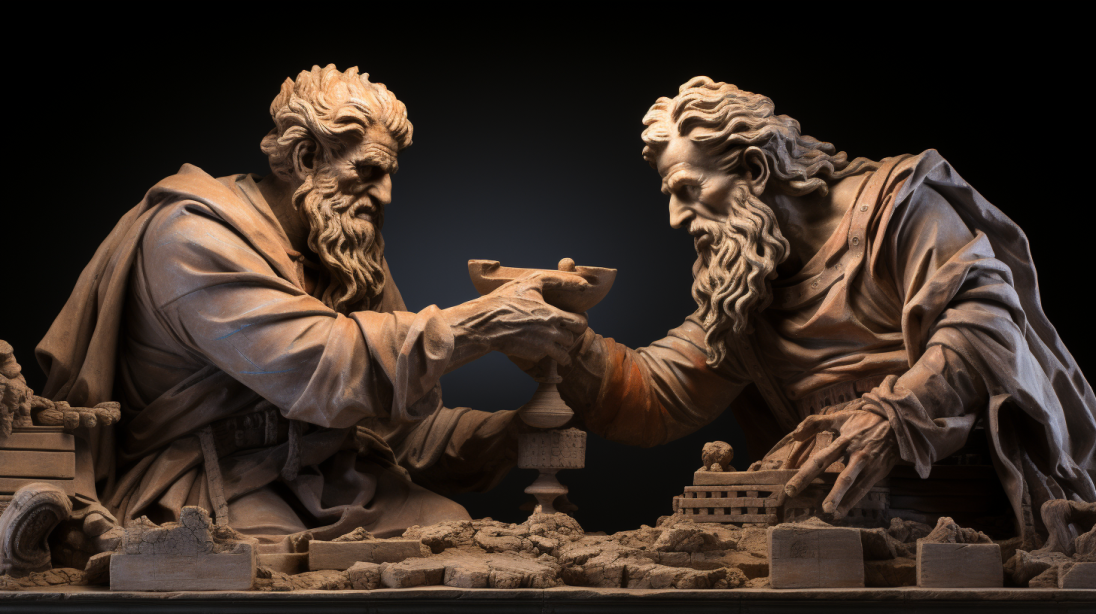
Beer has been around for over 8,000 years. The earliest trace of a cereal-based brew comes from Jihau in China, 7000 BC. There is also strong evidence to support ritual alcohol brewing for funerary feats at Gobleki Tepe, in modern-day Turkey, dating back to 9600 BC.
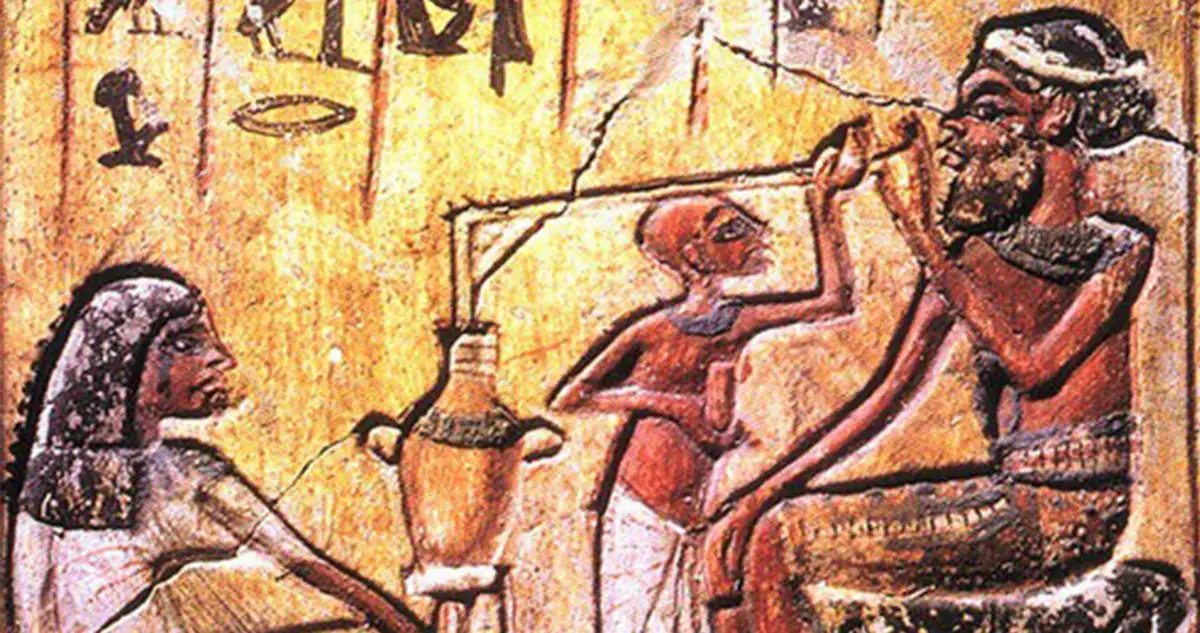
Beer in those ancient times would have been very different from modern-day suds. Far from our crisp golden lagers, ancient beers would have been dense, low-alcohol, darl, and packed with residual mash. That’s why the Sumerians and Egyptians used straws, as evidenced by ancient tablets.
Back in those days, beer was a staple of everyday life, along with bread and lentils. Those two probably supplied a large part of the everyday caloric intake. As far as everybody was concerned, beer was food. As late as the 16th century, Portuguese sailors could derive up to 40% of their caloric intake from beer alone.
In ancient times, beer and its fundamental ingredients—barley and malted barley—were so valuable that they were used as a form of salary. Sumerian officials could be compensated with roughly 5 gallons a day, enough to keep a comfortable entourage well-hydrated and happy. Beer was often the first manufactured product in most societies. Those who could ensure a steady supply of this liquid gold typically found themselves at the helm of power.
Fast forward millennia and Scandinavian lords were still expected to provide the legendary mead at the Mead Hall during grand events or, when things got dicey, during those infamous Viking expeditions.
Beer was not just food; it was a potent symbol of power—over nature and people. So much so that in 1960, an entire academic symposium convened to ponder whether the humble brew should be regarded as an essential driver of civilization.r men once lived by beer alone.
Modern History
Middle Ages
Ancient History
All About the History of Beer and Drugs

These 7 Pubs Made Canadian History
Pubs With a Past: Legendary Bars and Taverns You Must Visit

Booze Taxation Might Have Caused The Biggest Revolutions in History
Ales of Revolution: How Beer Fueled Historical Uprisings

What People Drank At Different Time Periods
Sumerians sipped thick, unfiltered ale. Egyptians paid workers with beer. Vikings drank smoky brews before battle. Medieval monks perfected Trappist…

Chicken Wars : How Poultry Tariffs Impacted Global Automobile Industries
A Highly Strategic Conflict… Over Poultry: How did a ridiculous spat in 1964 over frozen chicken have long lasting effects…

How Russia Fell in Love with Chinese Tea
Tea wasn’t always popular in Russia. Initially introduced by the Chinese by the Mongols, it gradually became a beloved drink…

Drinking Etiquette Around the World
Dive into the rich tapestry of global drinking customs with our guide to etiquette around the world. From Japan’s respectful…

A History of Kveik
Kveik is an amazing, all-purpose yeast originating from Scandinavia. In recent years, Kveik has generated a lot of excitement and…

The Fall of Rome: Death by Lead Poisoning?
As the Roman Empire neared its dramatic finale, it faced a cascade of challenges that threatened its very foundation. Among…

Women representation in brewing : From Ninkasi to Modern Industry
On International Women’s Day, let’s celebrate the many contributions of women to the world of brewing!

Meet Gruit: Europe’s Medieval Beer
Did you ever taste unhopped beer? Believe it or not, hops were only used in beer towards the late Middle…

American Beer Barons: How Busch, Pabst, and Schlitz Built Beer Empires
The American Beer Barons created dynasties that would endure for decades, rising to the top of the brewing industry. Busch,…

À quoi sert la musique?
La musique transcende le monde, élève l’âme et transmet des histoires. Quel a été le rôle de la musique dans…

London’s bizarre gin epidemic (1720 to 1751)
The gin craze was a curious social and economic crisis that affected London from 1720 to 1751. The introduction of…

Who Invented Beer?
Almost every civilization has had its own take on beer. The third most popular drink on the planet, beer is…

Drink like its the U.S. Prohibition with three epic cocktails
The American Prohibition, a controversial period in U.S. history from 1920 to 1933, left a lasting legacy in American culture,…

Who is Odin, the Mad God of Scandinavia?
Who was Odin? Mad god, god of alcohol, and also god of wisdom. In ancient times, the Norse ravaged Western…

Was Karl Marx an Alcoholic?
Karl Marx was a heavy drinker and smoker. Impulsive, choleric, and of fragile health, it is likely that he began…

Barley : the cereal that founded civilization
Barley is one of the first cereals cultivated by humans. At the heart of agriculture, it was a fundamental ingredient…

What did Napoleon drink?
Napoleon Bonaparte was known not only for his bold military strategies and revolutionary political reforms but also for his frugal…

What did soldiers drink during World War 2?
The English had their rum ration on land and at sea. The American marines had their 3.2% beer manufactured by…

Vodka diplomacy at the Yalta Conference
The Yalta Conference, held from February 4 to 11, 1945, was a profoundly significant event in history, especially towards the…

Stalin’s horrible binge-drinking parties
For the infamous soviet dictator, alcohol served both as entertainment and internal repression. Stalin’s comrades lived under the daily fear…

How South American Foods Changed History
The discovery of Americas changed Europe forever. One of the most curious aspects of the otherwise bloody encounter is how…

When Cocaine Was a Miracle Drug
The first to truly capitalize on the drug were the Incas, a vast empire whose territory, at its peak, stretched…

Alexander the Great and the Worst Party in History
Alexander the Great is one of the greatest names in history. He fascinates historians and inspires leaders. Visionary, modern, magnificent,…

From beer to toddy: a history of alcohol at sea
Uncover the story of Vice-Admiral Edouard Vernon and the birth of grog as the British navy’s preferred drink, complete with…

5 Beer brands owned by famous actors
Discover how famous actors have ventured into the beer industry with their own unique beer brand. Ryan Reynolds, balancing his…

Charles Joughin: Drunk Hero of the Titanic
Charles Joughin was the head pastry chef on the Titanic. Well known for his fondness for alcohol, he was reportedly…

Why do we say cheers and clink our glasses?
Why do we say cheers? Why do we toast? Why do we clink our glasses?

Bacchus: God of Psychedelics?
Bacchus is not merely a god associated with intoxication; rather, he represents the embodiment of the psychoactive potential of medicinal…