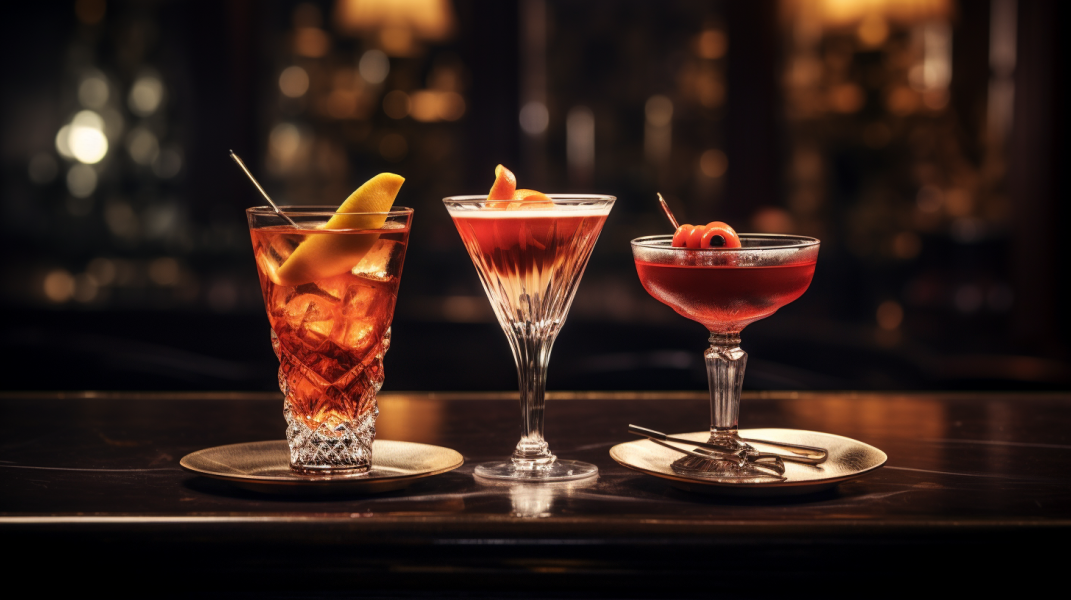
The American Prohibition, a controversial period in U.S. history from 1920 to 1933, left a lasting legacy in American culture, especially in the world of alcoholic beverages. While the sale, production, and distribution of alcohol were prohibited, this era witnessed an unprecedented creativity in cocktail making. Speakeasies thrived, offering ingenious drinks to disguise the sometimes dubious quality of bootleg alcohol.
Among these creations, three iconic cocktails—the Bee’s Knees, the Old Fashioned, and the Southside—have stood the test of time and remain integral to the modern cocktail scene. In this article, we delve into their fascinating history and their connection to the Prohibition era, showcasing the ingenuity of that tumultuous period in America.
What were the most popular cocktails during Prohibition?
Le Temps d’une Bière invited mixologist company Mixo Loco to recreate the most memorable cocktails of American Prohibition. Émile, a master craftsman and a true mixology encyclopedia, wasted no time in identifying the most remarkable recipes, all directly linked, of course, to history.
Émile draws a direct connection between adulterated alcohols and the inventiveness of speakeasy bartenders (the famous hidden bars entered by invitation only). Indeed, sodas and tonics were regularly added to alcohol to mask the repugnant taste of « denatured » alcohol coming from industrial manufacturers and diverted by bootleggers. But homemade alcohol (moonshine and hooch) was also unappealing—in addition to being hazardous to health.
According to Émile, Americans didn’t drink less during Prohibition; they drank differently. One of the bigwigs of American Prohibition, Al Capone, was reportedly a big fan of the South Side, a cocktail made with gin, mint, bitters, and lemon. But beware! Al Capone was very particular about his South Side. It had to be made perfectly, or else the bartender would be in trouble! On the other hand, the average person seems to prefer drinks like the Old Fashioned.
At the beginning of American Prohibition, President Warren Harding was known for his great fondness for cocktails, which he gladly drank and served. Needless to say, this president ranks among the most corrupt in the history of the White House. In the midst of the dry period, he had numerous bottles of champagne, wine, and whiskey delivered directly to the White House, serving them abundantly to his guests during poker games.
The term « Bee’s Knees, » taken from Chicago’s street slang, was a compliment of the time. The cocktail itself contains honey, lemon, and gin. Honey and lemon were precisely used to mask the horrible taste of bootleg gin. The end result is floral, lemony, and dangerously delicious.
Return of the Gin
Gin is probably one of the big winners of American Prohibition. As paradoxical as it may seem, gin is one of the few alcoholic beverages whose consumption increased throughout Prohibition and beyond. This is because gin had an unfavorable image in the early 20th century. Due to its relatively low price, gin was associated with poverty and the Old World, snubbed by the middle class aspiring to a higher status in their glass.
The New York elites had nothing but disdain for a drink that simply lacked class. However, the almost universal use of gin in speakeasies and its association with cocktails quickly rehabilitated the reputation of this old European beverage. By the end of the dark years of Prohibition, gin bottles reappeared on the menus of chic and trendy restaurants from New York to San Francisco.
With the end of Prohibition, the image of gin began to shine again. In the 1930s and 1940s, gin became a popular drink in higher social circles, partly thanks to its popularity among Hollywood celebrities. Classic cocktails like the Martini and the Negroni, both based on gin, gained prestige and were appreciated by people from all walks of life. By the late 1940s, gin had successfully established a solid place in American culture. It became a staple in bars and restaurants, and its popularity continues to grow.
Cocktail #1: Bee’s Knees
The Bee’s Knees, a classic cocktail from the 1920s, was a popular way to mask the sometimes questionable flavor of bootleg alcohol. This refreshing drink was one of the most enjoyable ways to savor the clandestine gin of that era.
Recipe:
- 2 oz gin
- 3/4 oz lemon juice
- 3/4 oz honey syrup
The gin, combined with the sweet aroma of honey and the freshness of lemon, created a harmonious blend, perfect for those looking to enjoy a good time despite the prohibition. The Bee’s Knees continued to be appreciated long after the end of Prohibition, thus becoming a part of the history of classic cocktails.
Cocktail #2: Old Fashioned
The Old Fashioned is an iconic cocktail that predates Prohibition, but it gained popularity during that era due to its simplicity and its ability to mask the mediocre quality of some bootlegged alcohols.
Recipe:
- 2 oz bourbon
- 4 dashes Angostura bitters
- 1/4 oz simple syrup
The bourbon, mixed with a touch of bitterness from the Angostura bitters and the sweetness of simple syrup, was a popular way to conceal the flaws of bootlegged alcohol. Served over ice and garnished with an orange slice or cherry, the Old Fashioned became a classic choice for those seeking a refined and enjoyable drink during the prohibition era and beyond.

Cocktail #3 Southside
The Southside is a cocktail that originated in the speakeasies of Chicago during Prohibition. This refreshing drink was a delightful way to enjoy illegal gin while relaxing in an atmosphere of secrecy.
Recipe:
- 2 oz gin
- 3/4 oz lemon juice
- 3/4 oz simple syrup
- 6-8 mint leaves
- 1-2 dashes of Angostura bitters
The blend of gin, lemon, and simple syrup, combined with the freshness of mint and a subtle touch of Angostura bitters, created an explosion of flavors that cleverly masked the often questionable quality of bootleg alcohol. The Southside became one of the most beloved cocktails of the time, and its appeal continued well after the end of Prohibition.
The Legacy of American Prohibition
American Prohibition was a tumultuous period in the country’s history, marked by challenges and restrictions surrounding alcohol. However, this era also gave rise to a creative cocktail culture, where drinks like the Bee’s Knees, the Old Fashioned, and the Southside thrived in order to mask the sometimes dubious flavor of bootlegged alcohol.
These classic cocktails have withstood the test of time, becoming symbols of ingenuity and the legacy of Prohibition. They continue to be an integral part of the modern cocktail scene, reminding us of the fascinating history of that turbulent time in America.
Read more on the U.S. prohibition and its drinks
- Livre : « The Art of Mixing Drinks » par Frank Meier Description : Publié en 1936.
- « Prohibition: Thirteen Years That Changed America » par Edward Behr
- « Speakeasy: The Employees Only Guide to Classic Cocktails Reimagined » par Jason Kosmas et Dushan Zaric
- Lien : « PBS – Prohibition«
- « Difford’s Guide – Prohibition Era »

Pierre-Olivier Bussières is the Editor-in-Chief of Hoppy History and Uber Optimized. He is the Sales and Marketing Director at Uberflix Studio. He also writes about travel, geopolitics, and alcohol markets, and has published articles in The Diplomat, Reflets, The Main, Go Nomad, Global Risk Insights, and Diplomatie.
Laisser un commentaire