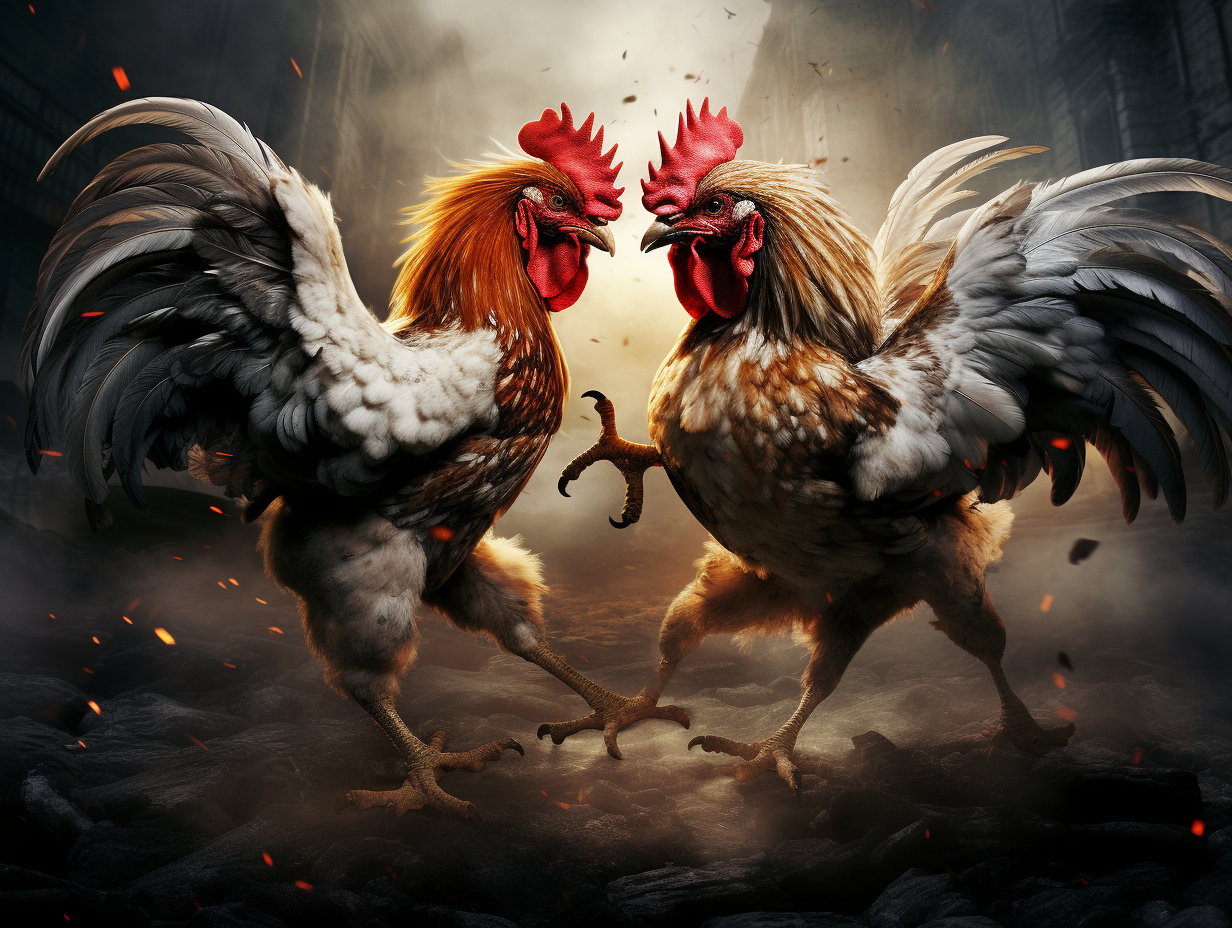
In February 2025, President Trump shocked the international community by announcing 25% tariffs on one of his closest allies: Canada. But if you think President Trump is the first to threaten these allies with economic warfare, think again: the United States also has a long history of protectionist tariffs. An episode from the Cold War will push this logic to the absurd: the Chicken War.
It all began around 1962 when American chicken was raised in mass production and sold at low prices. Following World War II, agriculture and farming were booming, and the country had a large surplus of poultry products for export.
However, on the other side of the Atlantic, European agriculture was struggling, and some countries, like Germany, were having difficulty meeting demand. While in the United States, this once-luxurious poultry became a daily staple thanks to intensive farming, chicken remained a refined but rather rare dish in Europe.
But then, the Americans flooded the European market with their frozen poultry, causing a dramatic increase in consumption. In 1961, Germany saw its chicken consumption jump by 23%, a boom mainly due to American imports.
German poultry farmers, seeing their businesses melt away faster than a roast chicken on a grill, sounded the alarm. Their government lent them a sympathetic ear and imposed a tax on American poultry, sometimes up to 40%. France, never one to shy away from good protectionist regulation, immediately followed suit. Four other European nations, all members of the European Common Market, imposed their own tariffs. Thus began the trade war of the century… over chicken.
The American Response: A Chicken for a Pickup
Faced with this treacherous attack on their poultry industry, the United States was not about to be plucked. In retaliation, Washington struck where it hurt: the European automobile industry. In December 1964, President Lyndon B. Johnson signed a law imposing a 25% tax on several European products, including… light utility vehicles. Thus was born the legendary Chicken Tax.
In other words, to avenge its chicken thighs, America decided to heavily tax foreign pickups. This decision shook the automotive industry: European manufacturers, used to flooding the American market with their light utility vehicles, found themselves facing an insurmountable tariff wall.
The Germans took the hit, while Volkswagen, Renault, and others racked their brains to circumvent the tax. Outlandish strategies emerged: some manufacturers sent their pickups in parts to the United States to assemble them on-site, hoping to dodge the tax. Ford, on the other hand, pushed absurdity to its peak: the company temporarily installed rear seats in its export pickups to pass them off as passenger vehicles, only to remove them once the vehicle was delivered. Bureaucratic genius.
Roasted by Taxes
What could have been a passing quarrel became lasting legislation. While the trade war over chicken dissipated, the Chicken Tax on utility vehicles refused to disappear. Still in effect today, it continues to shape the American automotive industry, forcing foreign manufacturers to be cunning to avoid prohibitive costs.
The result: American giants General Motors, Ford, and Chrysler dominate the pickup market in the United States. Meanwhile, European pickups remain exotic curiosities, rare on American soil. For Volkswagen, Renault, and Fiat, there’s no happy ending on the American highway.
And the irony of fate? The Chicken Tax, intended to protect the American automotive industry, ended up turning against it. Starting in the 1980s, American manufacturers relocated their factories abroad. The result: some of their own pickups also became subject to this tax they initially demanded. An economic karma worthy of a cold dish (or a frozen chicken).
More than fifty years after this absurd war, the remnants of the Chicken Tax continue to weigh on the industry. Attempts to abolish it face resistance from American manufacturers, reluctant to see an armada of foreign pickups ready to ravage their monopoly.
Meanwhile, in Europe, restrictions on American chickens are still in place, mainly for health reasons (the good old debates on chlorine and hormones). European consumers have not seen a flood of Yankee poultry but have inherited ultra-protective agricultural regulations.
The Modern Absurdities of the Chicken Tax
Even today, the Chicken Tax leads to practices worthy of a comedy script. To avoid the surtax, some Japanese and European companies assemble their utility vehicles in countries like Canada and Mexico, which are not subject to the tax under NAFTA. Others employ even more absurd strategies, such as sending vehicles to Europe to install rear seats, before shipping them back to the United States, where these seats are then removed. Yes, you read that right: some vehicles make a pointless trip around the world just to circumvent a tax inherited from a chicken conflict of the 1960s.
The Washington Post even questioned whether this tax has truly protected the American industry or if, on the contrary, it has prevented it from evolving by making it complacent and uninnovative. In other words, the Chicken Tax may have become more of a burden than a shield.
From time to time, voices are raised to abolish this economic aberration, especially within the framework of international trade agreements like the Trans-Pacific Partnership. But so far, no American government has dared to tackle it head-on. Local manufacturers, well entrenched behind their tariff wall, have no desire to see an armada of Asian and European pickups ready to compete on their turf.
Thus, the chicken war of the 1960s continues to dictate the rules of the American automotive market more than half a century later. And in the meantime, fans of imported pickups still have to pay a hefty price for the right to drive something other than a good old Ford F-150.
In the end, this trade war will remain a monument of the absurd. It reminds us that geopolitics is not always played with missiles, but sometimes with nuggets. And that, in the end, in this story, perhaps the consumers were the real turkeys of the farce.

Hervé Mina: Hervé is a chef for the catering company Eldora in Switzerland. With over 15 years of experience as a chef, he has managed several culinary establishments in England and Switzerland. Hervé is also passionate about the origins of the world’s great recipes.
Laisser un commentaire