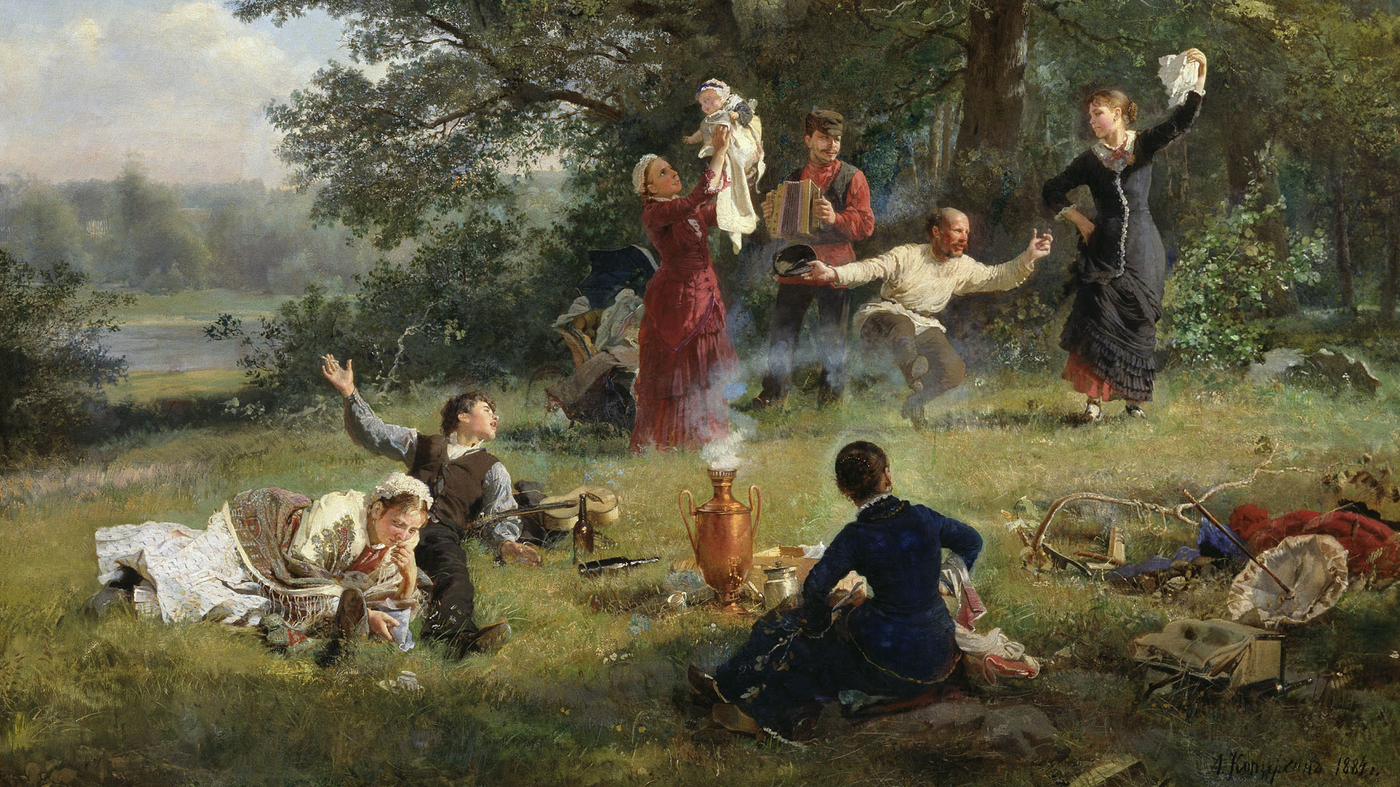
When thinking of Russia, there are all sorts of stereotypes that come to mind, but a nation of tea drinkers is certainly not one of them. Yet Tea is a big deal in Russia. Over 90% of Russians drink tea every day, consuming approximately 1.3 kg of tea per capita annually, making Russia one of the largest tea consumers globally. This ranks Russia in the top 5 countries for tea consumption worldwide.
It certainly wasn’t always like that. Like many other cultural borrowings, tea was long heavily frowned upon by a jealous elite, not least because those who first introduced tea to Russia had been occupying the country for nearly two centuries. So how did Russia come to embrace this ubiquitous drink?

Russia was a late adopter of tea
Tea drinking first emerged t in ancient China, in addition to some of the earliest records of fermented alcoholic beverages. Opinions vary, but a rough and conservative estimate places the first adoption of tea drinking in China about a millennium and a half before the first tea leaves would ever enter Russia.
Russia largely had no relationship or contact with China before the turn of the sixteenth century. However, the country’s first experience with tea (beyond a handful of prior small incidents) would come not from the Chinese, but rather from the disintegration of the rule of the Mongol feudal lords. The rebellion against the Ming dynasty, underway by the mid 1630s in China had altered the balance of power for the Mongol lords.
Of these men, Altyn Khan III had been seeking protection from a rival of his by aligning himself with the Russian Tsar for some time however Tsar Mikhail Feyodorovich, the first of the Romanov line, was unwilling to accept anything but unconditional submission to his authority. Negotiations were not going as either man had hoped and so, in 1638, the Tsar’s emissaries went to Altai (centered around today’s northwestern Mongolia) to obtain the Khan’s formal oath.
While the Khan remained reluctant to agree, he offered the envoy a gift part of which consisted of 200 parcels of Chinese tea, insisting that it was of great value and that it be presented to the Tsar despite the protest of the Russian officials. In a rather tragic and humorous moment in history, it appears the delegation had called it right: Upon its arrival in Moscow the tea vanishes from the record, disregarded by a Russian ruling class that knew nothing of its value or utility.
Around this time another milestone in Russian history had been achieved. Not one year after the incident with the Khan, the Russian conquest of Siberia would finally reach the Pacific Ocean. Over a half-century prior in 1580, a band of approximately half a thousand Cossacks would strike out from Muscovy and begin repelling the forces of the Khans, gaining strength as their mission went on and extending the reach of the Muscovite Tsar.
The construction of forts at critical river crossings served to immediately solidify Russian control over conquered territory and ensured a steadier chain of supply to continue the eastward drive. This rapid expansion meant that, as early as 1650, Cossack settlers and the Manchu Chinese were engaging one another, often on hostile terms. In attempting to normalize relations, several delegations, and trade caravans would make the journey over the next 50 years; however, Russia’s aversion to tea would damage these efforts as Russian visitors refused offerings of the drink under the cautious advice of their superiors at home.
Reasons for Russian hesitance in adopting tea, both as a foodstuff and as a cultural practice, are numerous and varied, yet all are revealing about Russia’s culture and place in the world during the sixteenth and seventeenth centuries. To begin, the country’s ruling establishment of the day was strongly conservative. The Time of Troubles, a brutal decade and a half of lethal famine and lawlessness at the start of the 1600s (which saw the population halved in many places), had left the nobility and clergy intensely focused inward on building up Russia as a nation.
Literature originally penned in the previous century, wary of accepting novelties from the outside world, seemed vindicated by the ensuing chaos. However, the secular scribes’ work could not begin to approach the persuasive power of the entity most responsible for the nation’s skepticism: the church.
Orthodoxy had been practiced in Russia for over half a millennium by this point and governed most aspects of daily life for both peasants and nobles alike. The Orthodox tradition held that faith and the church were inseparable, meaning it was the duty of every parishioner to obey closely the instructions given by church authorities.
In 1551, the Stoglav, or “Hundred Chapters,” was penned by the Holy Synod to outline how the faithful and secular worlds should conduct themselves, how they should interact, and how a good Russian Christian ought to behave.
One of its instructions stated that the godly Russian should not be subject to foreign customs on account of having been divinely chosen to follow God’s true law. While the publication would be overturned and banned from circulation a little over a hundred years later, the church’s influence in slowing the progress of tea into Russian life persisted all the same.
When Tea Was Used as Medicine in Russia
The first adoption of tea in Russia was as a medicine, and indeed this would become the norm for how it was employed in Russia for at least the next 100 years. Western Europe had, by the time of Russia’s ill-fated Altai diplomatic mission, adopted tea in a similar capacity. By the 1650s, the trend was beginning to take hold in Russia, but there was still stiff resistance, once again from the church.
As had been, and would continue to be the norm in Russia, disease was often regarded by the church (and indeed many physicians) as a spiritual matter. It was contrary to holy doctrine to appeal to earthly remedies, a notion which, combined with the foreignness of tea, meant that it came to be seen as an exotic and dangerous alternative to the power of prayer and trust in Christ, one which flirted with heretical thought.
These fears were heightened by another, far more earthly concern: since before the Time of Troubles, due to the proficiency of poison as a means for political assassination, the Muscovite authorities had become highly suspicious of all herbal products and the apothecaries who made them.
Overcoming these fears was a challenge, one undertaken by Moscow court physicians, invited from abroad to advise the Tsar’s apothecary administration on new medical techniques. Arduous and slow progress was made in this regard, but it wouldn’t be until the next century that tea would cease to be a novelty in Russia.
Owing to the success of the European colonial project, Western Europe began importing tea more rapidly and in larger quantities throughout the seventeenth century. This steady normalization (and more importantly, the price drop that accompanied it) allowed tea to become widely accepted as a drink of choice in Europe and opened the market, making tea an increasingly profitable commodity on a larger scale.
Although it was still far outmatched by the value of traded furs, textiles, and precious minerals, and gems, tea was finally beginning to carry some economic weight for Russia. Sino-Russian trade relations remained in an ad hoc arrangement (and wouldn’t be formalized until after the death of Peter the Great). The fuel needed to fire trade with China was there and waiting, and the spark would finally be delivered with the creation of a document in 1727: the Treaty of Kyakhta.
This agreement cemented the town of Kyakhta as the officially sanctioned site for commerce between the two countries. With its construction, Kyakhta served as a forward base of operations for more regularly scheduled caravans into China, approximately every half-decade, until these were later disbanded and replaced by individual merchants.
Over the next few decades, Kyakhta would rise and fall, spending long periods out of operation as relations with China ebbed and flowed. By the turn of the nineteenth century, trade through the city was climbing each year, with tea imports approximately doubling the annual amounts recorded between 1760 and 1790. By 1792, tea imports were doubling annually.
Driving this steady increase in demand for tea was its growing popularity as a beverage among Russia’s elite circles, and driving that, in turn, was one of the most remarkable women of the century. No proper discussion of the transformation of Russian society in the eighteenth century can exclude a mention of Catherine II, later known as Catherine the Great.
The changes she wrought upon the country during her rule produced seismic shifts and cultural landmarks that reverberate to the present day. Born to a gentleman of the minor nobility in the Holy Roman Empire and an extremely ambitious mother, the girl who would become Catherine the Great was first called Sophia.
By all accounts, she was a bright and fiercely curious girl, to the point of exhausting her tutors with questions. A latent intellectualism, marked by her voracious consumption of the written word and ideas from beyond her personal experience, would become a defining characteristic of her life and rule.
The wishes of her family and a fortuitous meeting with Frederick the Great saw her journey to Moscow, where she quickly became infatuated with Russia’s court life, culture, and faith. It was there she reunited with and later married Peter III, a boorish and aloof young man (then still a boy by modern standards), from whom she would later seize the throne in a popular and bloodless coup in 1762 after his neglectful treatment of his position as Tsar. Her conversion to Orthodoxy, occurring soon after her arrival, was the event that saw her adopt the name Yekaterina (Catherine).
During her reign, Catherine would wield her steely will and fierce wit to implement a schedule of reform to Russia’s backwardness. The country’s socio-political inertia was, in many ways, too great for even its sovereign autocrat to overcome, but limited successes, by any measure of the day landmark achievements, were realized.
Church land was brought under sovereign taxation, and the borders of the country were expanded to include large swathes of Poland, Ukraine (then called Malorossiya), and the Ottoman Empire. She even addressed the aforementioned superstitious beliefs surrounding medicine and healing by instituting the first program of national inoculation against smallpox, credited with saving the lives of many of her subjects.

More than anything, what made Catherine deserve her honorific was that, although she was a strict authoritarian, she believed that her stewardship could only be effective and worthy of the Russian people through wisdom and being a truly informed leader. To this end, her Western Enlightenment ideals permeated her entire reign.
In another instance of grim comedy from Russian history, she was awarded her title “The Great” via an assembly of Russians from all free segments of society which had originally been convened to offer their thoughts on her Enlightenment approach to lawmaking and enforcement. Instead those present, unaccustomed to Russian autocrats of any kind seeking any kind of feedback, felt that their loyalty was being tested, hence the humble yet vacuous gesture of the honorific.
This relentless importation of European concepts did not stop at politics and law: European literature, artwork, architecture, drama, and social customs all at once washed over Russia, especially among the elite, spurred on by Catherine’s encouragement throughout her reign. Near the beginning of her time on the throne, tea was already gaining some acceptance as a means of projecting wealth and actively living out the separation of the classes as a uniquely noble indulgence.

The adoption of this social signaling required the creation of new class-specific hardware to accompany it, replete with the latest and greatest decadent craftsmanship. Teacups, pots, saucers, and other pieces of finery were generally rare and valuable items; however, their prominence as showpieces, expensive trophies, or gifts of honor grew steadily during this time.
This is not to say that tea was uniquely reserved for the presence of the company— the proliferation of more mundane tea-drinking implements indicates a more consistent consumption of tea. Changing attitudes toward tea were also reflected in Russian literature. It remained characterized as a foreign decadence, but this could be interpreted in multiple ways by the artists of the time.
The old hostility about these factors persisted in the dramas and novels of the period, albeit wielded with a more deft and humorous touch as a literary device, rather than as a cudgel by the blanket prohibitions and denouncements of the church in prior centuries. Toward the latter half of the eighteenth century, these attributes received favorable attention, both as symbols of elite status and financial means, as well as markers that cast China— from where the tea still came— as a far-flung land of mystery and wealth.
Several mentions of tea being served at official royal functions also date from this time, with even Catherine herself writing of such occasions. The picture is clear: The importation of European ideas by a radical monarch, combined with the slow thawing of Russian xenophobia, meant that tea was slowly becoming more accepted, even as it remained inaccessible to the common Russians.
Catherine and her westernizing agenda played no small part in this transformation, but for all the benefits the Enlightenment brought to Russia, one man from its heartland, revolutionary France, was about to present Russia with a butcher’s bill for the history books.
Starting shortly before Catherine’s death and lasting through the entire reign of her son Paul and much of her grandson Alexander, France embarked on a series of wars. Arrayed against France’s export of revolutionary ideals was much of the rest of Europe, forming coalition after coalition to preserve the balance of power and suppress revolutionary thought.
Eventually, Napoleon, later made Emperor of France, would lead this effort and deliver punishing defeats to all of Europe, capturing nations, situating relatives on their thrones, and, importantly, subjecting the conquered countries to the Continental System—a set of trade edicts that advantaged France and cut Great Britain, the final remaining threat to France, out of the trading picture for the rest of Europe.
The effect on the tea trade through Europe was, of course, immediate and severe, but despite this, Russian importation of tea continued to rise, likely due to other opportunities through trade with China. Be that as it may, tea was, of course, not the focus of Russia’s trade with Europe. As pressure and economic strain mounted, by 1810, Russia was forced to resume trade with Britain and quickly became a vector by which British goods entered European markets.
Upon discovering this (and after some attempt at subduing Spain), Napoleon gathered his forces to respond to an ultimatum issued by Tsar Alexander I. He invaded Russia in the summer of 1812 with 600,000 troops at his back—the largest land army Europe had ever seen—with the intent of obliterating Russian military resistance and forcing Russia to rejoin the Continental System.
The breakneck speed of the march of the Grande Armée across Russia took them farther and farther from their supply lines. As a general rule, Napoleon favored an offensive strategy known as defeat in detail, in which his forces would concentrate their power against a particular component of an enemy force, destroying it through overwhelming force, and then turning their attention to another component.
The Russians knew to expect this—Napoleon had humbled them before—so they adopted the infamous “scorched-earth” retreat, destroying the towns and resources ahead of the encroaching French while retreating toward Moscow, denying Napoleon his decisive victory or the ability to live off the land. In this way, the Russian army retained the ability to threaten Napoleon without ever drawing so near as to be cut off and completely destroyed.
Nevertheless, the French eventually caught up and inflicted heavy damage on the Russian army in the horrendous fury of the Battle of Borodino, after which the Russian retreat left the path to Moscow open. Upon the French arrival, however, they were dumbstruck to find the city largely abandoned and set ablaze by the very Russians who had been living there.
Even with Moscow in enemy hands, the Tsar, safe in St. Petersburg, refused to surrender. As the brutal heat gave way to the flesh-ripping conditions of the Russian winter of 1812, Napoleon’s forces were forced to retrace the same scorched-earth path they had crossed on their approach, harried by Russian militants and Cossack fighters.
The conditions were extreme and far outside what could be endured by men in their summer equipment with no supplies, and the resultant casualties saw their number reduced to less than a sixth of what it had been the previous summer. Hundreds of thousands were dead. Corpses and cities were desecrated, and Russia itself had suffered terribly.
Despite the grim toll, Russia had weathered Napoleon’s invasion and set quickly about rebuilding, the Emperor’s invincible reputation damaged forever by their stalwart defense. Curiously, while trade had been disrupted across the board, tea imports recovered extremely rapidly. While the war had cut them in half, by just the next year imports of tea through Kyakhta had resumed and grown half again as strong as they had been in 1811.
By 1820, possibly from officers returning home and disseminating the practices they’d learned abroad, tea drinking became far more common and was limited neither to just the upper nobility nor to use as a medicine. While certain types of tea were still inaccessible, the drink became more available over the decades of the nineteenth century: by 1840, even though it was still small a minority of Russians who drank it, tea was coming to be seen as an indispensable part of Russian life; by 1870, it was not uncommon to hear of average folk drinking tea several times per day.
This development constituted the start of the russification of tea drinking. encouraged by Russia’s quest to find a uniquely Russian identity after the war in 1812 had soured opinions of the French, Western Europe, and the Enlightenment. This was the final thawing of tea into common usage, and with its slow proliferation came an instrument that would see itself engrained into Russian lore, enduring to the present day.
The origins of this device, the samovar, are shrouded in mystery. Some speculate that it appeared first in China, and others that it was imported by one of Russia’s great reformers from Europe. All agreed, however, that it is unlikely the samovar had its start inside Russia’s borders.

Despite this uncertainty about its origins outside of Russia, the samovar has been an icon of Russian culture for nearly 200 years. At its most basic, it consists of a large urn with a hollow pipe at the center. Water and tea, either leaves or brick form, are brewed in a separate pot in concentrate and rested atop the pipe to keep warm. Coals or some other fuel are added to the pipe’s interior and the fire is stoked to warm water in the urn, which is added per the drinker’s preference to dilute the concentrate via a faucet or tap at the side of the device.
The term “Samovar’ is a portmanteau of the Russian word “сам” meaning “self” and “Сварить” meaning “to boil”. Seeing limited use among the aristocracy as far back as the start of the reign of Catherine the Great, the samovar gained in popularity along with tea drinking with a lag period of about 20 years consistently throughout the nineteenth century. Literature from the period (as far back as the 1830s) already spoke of the samovar as a uniquely Russian marker of culture and civilization, a trend that would carry on even into the Soviet period.
The continuation of Russia’s longing for a distinct culture would continue through the rule of Nicholas I and his son Alexander II (both of these men adopted the title of Emperor). For the former, Russian identity was a noble and righteous notion to promote by his highly conservative agenda. In the service of this goal, to continue to keep tea an upper-class indulgence and preserve the concentrated power that trade with China through Kyakhta had taken on, the Russian government sought to keep prices high and cut off tea importation from Western Europe in 1822.
This measure only ever saw limited effectiveness and, as it was not working, the government grudgingly began to relent, most notably in 1837 when it legalized the serving of tea in common establishments of food and drink. For Nicholas’ son, Alexander II, the seeking of a distinct Russian identity prevailed as a means of unifying his realm in the face of the turbulence of the Crimean War and the upheaval of a strangulated attempt to free Russian serfs from their bondage.

Whether or not it was the intent to increase cultural cohesion or simply a pragmatic call, the importation of tea over sea was finally permitted again in the 1860s and the custom was rapidly taken up once more by an even greater portion of the population over the next decade. Tea would perform some noteworthy functions in Russian society through the reign of these two very different leaders.
For both of them, tea drinking would serve as a unifying Russian tradition, be it exclusively among the nobility, in the peasantry, or both. It also saw an unexpected surge in popularity as an alternative drink to spirits. For much of its history, Russia has been notoriously plagued by rampaging alcoholism and, while tea was certainly not enough to overcome such an entrenched problem, it did gain publicity as a result.
In the latter half of the nineteenth century, through a gradual process of lowering costs, increasing imports, increasing artistic depictions, and the march of time, tea would eventually become a solid fixture of Russian culture, one that only strengthened after the year 1900. Tea culture today in Russia continues, having come through the Soviet period as a shining example of Russia’s civilizing project and a convenient piece of Russian myth upon which to play for a sense of unity and communal tradition, no doubt easily to the desired portrayal of communist society.
While the samovar is often a showpiece and more practical modern alternatives are used where available, many communities without access to amenities will still rely on them to prepare their beverages. Regardless of its foreign origin, tea is as much a cultural symbol in Russia as it is in England. From a foreign medicine regarded with hostile suspicion to a fixture of daily life and a uniter of culture, tea has had a vivid and dynamic role in shaping both the Russia of antiquity and the Russia that endures today.

Jonathan Reep is a graduate student of European and Russian Studies with EURUS at Carleton University, holding a Bachelor’s in the same discipline. His research interests fall primarily on the propaganda, deceptions, and behaviors of right-wing authoritarianism and religious extremism.


Laisser un commentaire