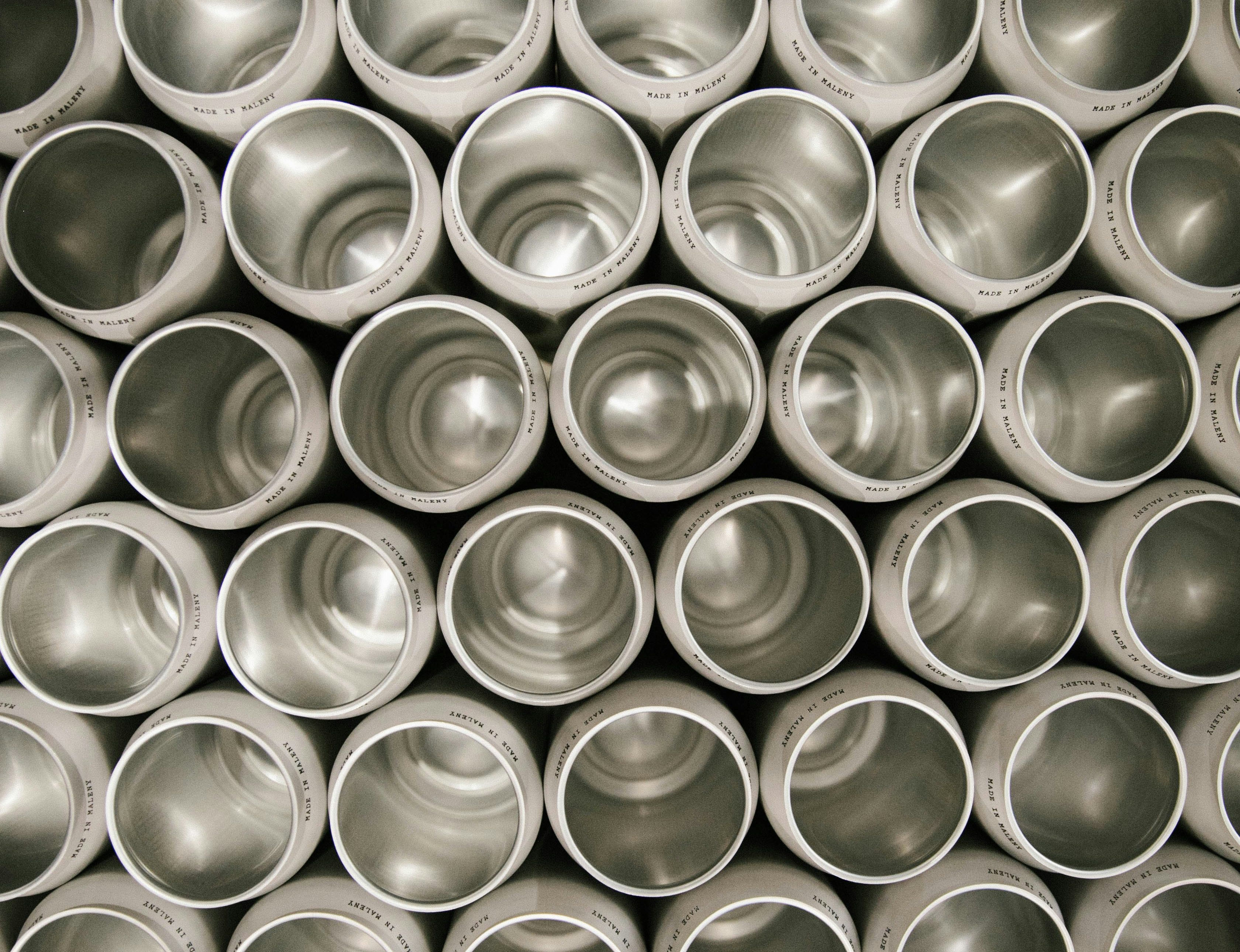
Will the price of beer cans go up? Who will bear the real cost of Trump’s tariffs on Canadian aluminum in our beloved beer cans? Even before the tariffs take effect, Quebec’s brewing industry is bracing for the worst. Le Temps d’une Bière takes a closer look at the real impact on consumers.
The Impact of Tariffs: What’s Been Said
Sébastien Paradis, CEO of Brasseurs du Nord, told the Journal de Montréal that a 25% tariff on aluminum could cost the company an estimated $1.56 million for the roughly 1.3 million cans sold each year. Meanwhile, Marie-Eve Myrand, Executive Director of the Quebec Association of Microbreweries (AMBQ), estimated that the price of a can could increase by $0.10 to $0.20.
In an interview with Le Temps d’une Bière, Philippe Roy, Executive Director of the Quebec Brewers Association (ABQ), shared his concerns about the final price of beer. “It wouldn’t be surprising to see a 30% increase in the final sale price. After the tariff announcement, major Canadian breweries are already expecting to cut back on certain expenses. The overall impact could amount to millions of dollars, especially if Canada responds with its own tariffs on American aluminum.”


But How Much Do Tariffs Really Impact the Price of a Beer Can?
Aluminum is far from the biggest factor in determining the cost of a beer can. René Huard, owner of Simple Malt, a brewery based in Saint-Eustache that distributes across Quebec, believes that the tariffs announced by President Trump will have only a minimal effect.

« First, aluminum makes up just 10% of the total cost of a beer can. So, the tariffs don’t affect the most significant cost factors, like labor or transportation. Second, major breweries have one- to two-year supply contracts, meaning they won’t be immediately impacted. There’s a lot of confusion and misinformation surrounding this 25% aluminum tariff debate. »
To truly understand how this price hike on aluminum might play out, let’s go back to the basics: How much does a beer can actually cost in Canada?
A Few Key Facts
The cost of a beer can varies significantly between small craft breweries and large-scale commercial breweries. In short, small breweries that buy in lower quantities are at the greatest risk of being disproportionately affected.
- Mega-breweries purchase entire truckloads of pre-printed cans directly from producers. While their exact costs are unknown, they are undoubtedly far lower than those of smaller craft breweries.
- Mid-sized microbreweries (like ours) buy a few truckloads or half-truckloads of 473 ml cans two to three times a year, paying between 11.9¢ and 12.9¢ per can, depending on order volume. Large breweries, ordering 300 times more per production site, benefit from much lower rates.
- Small Quebec microbreweries primarily source their cans from Hart Print in Montreal, where they pay between 37¢ and 43¢ per printed can.
Impact of the 25% Tariff
Let’s assume the tariffs are in effect. For simplicity, let’s say the standard cost of a can for a brewer or printer is 12¢—a price that includes not just the aluminum but also all production costs.
If we take the unrealistic assumption that 12¢ covers only the cost of aluminum, a 25% tariff would add 3¢ per can. However, in reality, aluminum makes up only about 10% of the total can price, meaning the actual increase would be just 0.3¢ per unit.
Fact-Checking with Aluminum Prices
- Current aluminum price: $2,639.10 USD/ton
- Conversion rate: $3,770.86 CAD/ton
- Aluminum per can: 16 g
- 1 ton = 62,500 cans
- Aluminum cost per can: 6.33¢
- Price increase due to a 25% tariff: 1.5¢ per can
Consequences for Craft Breweries
More than 80% of microbreweries produce less than 2,000 hectoliters per year, meaning even a small increase per unit can make a big difference on a pint. The smaller the brewery, the more these extra cents add up.
While the price increase itself may seem minor, it’s just one more cost hike in a long series of rising expenses craft breweries have faced since the pandemic. Annie Saint-Hilaire, co-founder of Microbrasserie du Lac Saint-Jean, argues that one of the biggest challenges for small breweries is a race to the bottom in pricing, making it harder to stay profitable.
A Price War with No End in Sight
In a market where a price war has been raging for years, craft breweries simply can’t pass these additional costs on to consumers—not while they’re competing against major players selling beer for $4.99. That price may have made sense in 2018, but it no longer reflects the surging costs of raw materials. The reality is that craft breweries will be forced to absorb these costs, even though their margins on canned beer are already razor-thin. In most cases, the absolute minimum price a craft brewery can sell a beer for in a grocery store or retailer is $5.50.
Skyrocketing Costs Across the Board
- The price of malt has surged 300% since craft beer became popular, including a 25% jump in the last two years.
- The cost of hops has more than doubled for classic varieties and quadrupled for the most sought-after ones.
- Industrial licensing fees have doubled.
- The cost of packaging materials like cardboard has nearly doubled.
The Answer Lies in the Brewpub
At the end of the day, if beer prices must go up, it’s far less because of Trump’s protectionist aluminum tariffs and far more due to the relentless rise in ingredient and operational costs for Quebec’s craft breweries. And all of this is happening while these breweries remain tied down by outdated laws and receive no meaningful government support.
In an era of economic nationalism, the smartest response to all this uncertainty might just be found at your local brewpub.

Pierre-Olivier Bussières : Editor-in-Chief or Le Temps d’une Bière and producer of Hoppy History. Pierre has previously written for The Diplomat, Global Risk Insights and the NATO Association of Canada. For the past two years, Pierre has been writing on the history of alcohol from antiquity to modern times, with a special focus on the role of craft breweries in North America.


Laisser un commentaire